Humid air versus standing water
A material can cope well with higher humidity, but prolonged contact between an unsealed edge and water is still a risk. Cut-outs, joints and areas near the plumbing are the most vulnerable.
After a bath or shower the room should be ventilated, and it is worth wiping water off the worktop.
Carcass and door materials
We use materials designed for rooms with higher humidity and suitable door surfaces. Lacquer, laminate and veneer can all work if the construction and finish are right.
A sample should be judged together with its edging and the way the cut-outs are made, not as a décor alone.
Wall-hung or floor-standing?
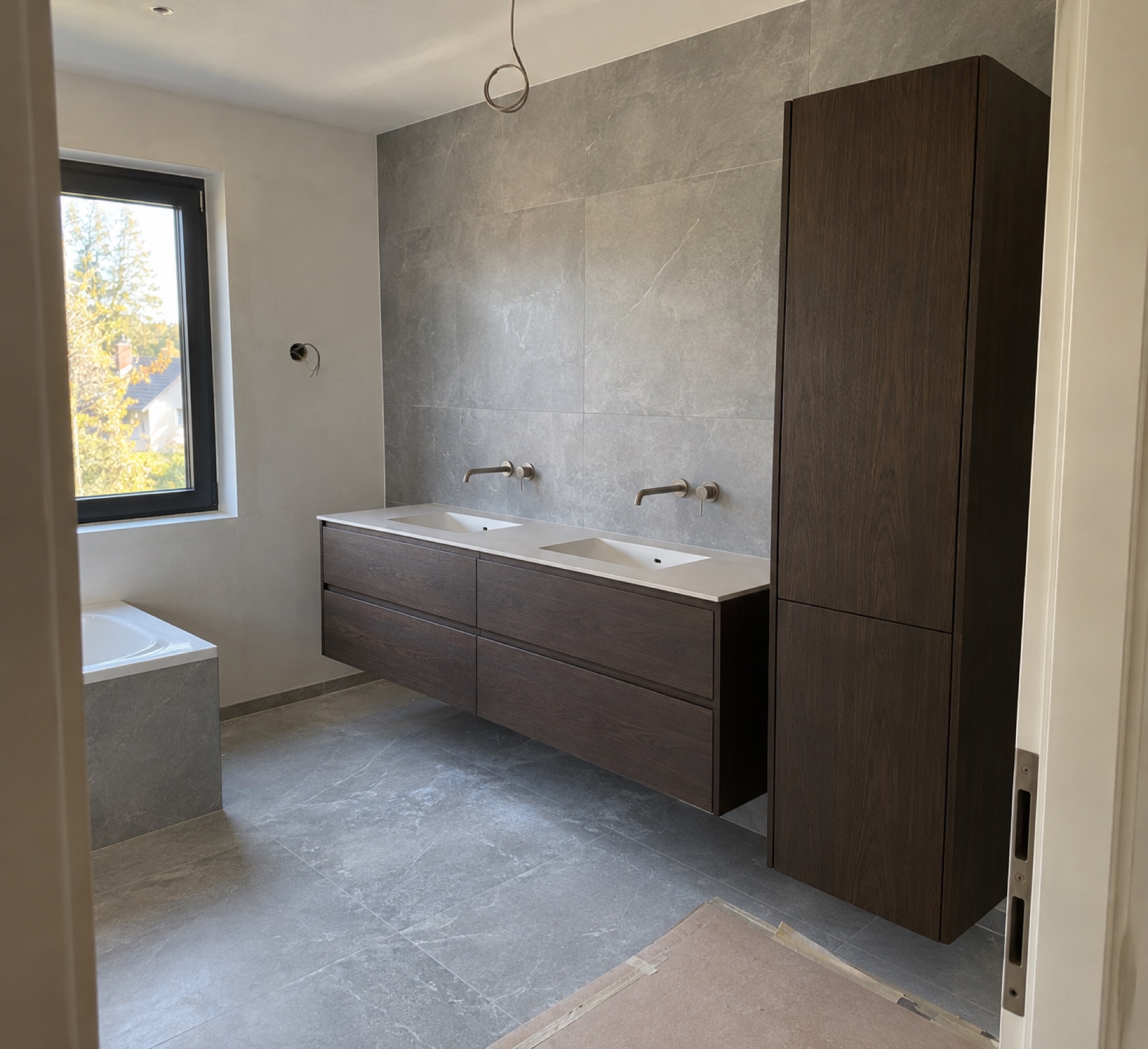
A wall-hung unit makes cleaning easier and keeps the plinth away from water, but it needs a wall that can carry the load. A heavy worktop and basin increase the installation requirements.
Before making the furniture we check the pipe routes, frames and the type of wall.
Worktop and basin
With a countertop basin, sealing the cut-outs is important. With an undermount or integrated basin, the construction depends on the worktop material.
Service access to the trap should stay simple: a beautiful drawer must not make plumbing repairs impossible.
Frequently asked questions
Is ordinary laminated board suitable for a bathroom?
It can be used in the right construction if the edges and cut-outs are properly sealed and the furniture does not stand in the wet zone.
Can a cabinet hang on a plasterboard wall?
Yes, as long as suitable reinforcement was planned in advance and the fixings match the wall construction.
Every room has different dimensions and constraints. Describe your project in the form and we will get back to you with the next steps.