Fluted doors versus slats
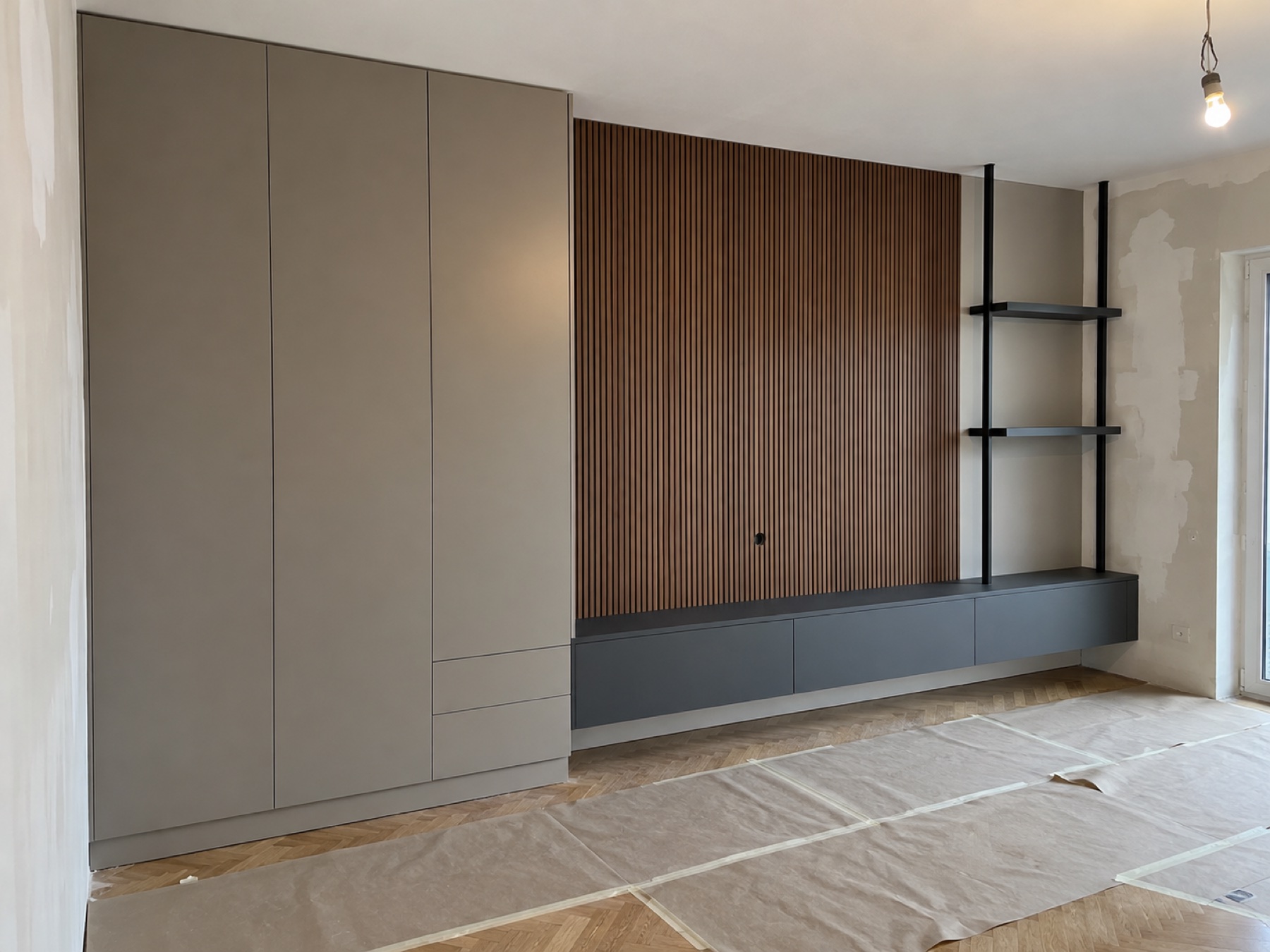
A fluted door is a moving part of the furniture with a regular routed or applied profile. Slats are separate battens or a panel used on walls and the sides of units.
The right technique depends on the radius, colour, how continuous the pattern needs to be and where it is installed.
Why does this detail cost more?
The surface needs extra machining, careful finishing of the grooves and matching of the divisions. With veneer, selecting and laying the grain adds to the work.
You can keep the cost down by using fluting only on the island, the TV unit or one section of tall units.
How to clean the grooves
It is best to remove dust regularly with a soft brush or a vacuum cleaner with a gentle nozzle. Wet marks are cleaned according to the surface finish, without aggressive scrubbing.
Right next to the hob we choose a material and profile that are easy to keep clean.
How to avoid overdoing it
Fluting is a strong pattern. It looks good next to large, calm surfaces and a simple worktop.
In a small room, one accent usually works better than covering every door with the same rhythm.
Frequently asked questions
Do fluted doors get dusty quickly?
The grooves collect more dust than a flat door, but regular cleaning with a soft nozzle is easy.
Do slats improve acoustics?
Hard battens on their own have a limited effect. Systems with an absorbent layer and specified properties make a clearer difference.
Every room has different dimensions and constraints. Describe your project in the form and we will get back to you with the next steps.