What makes up the price of a wardrobe?
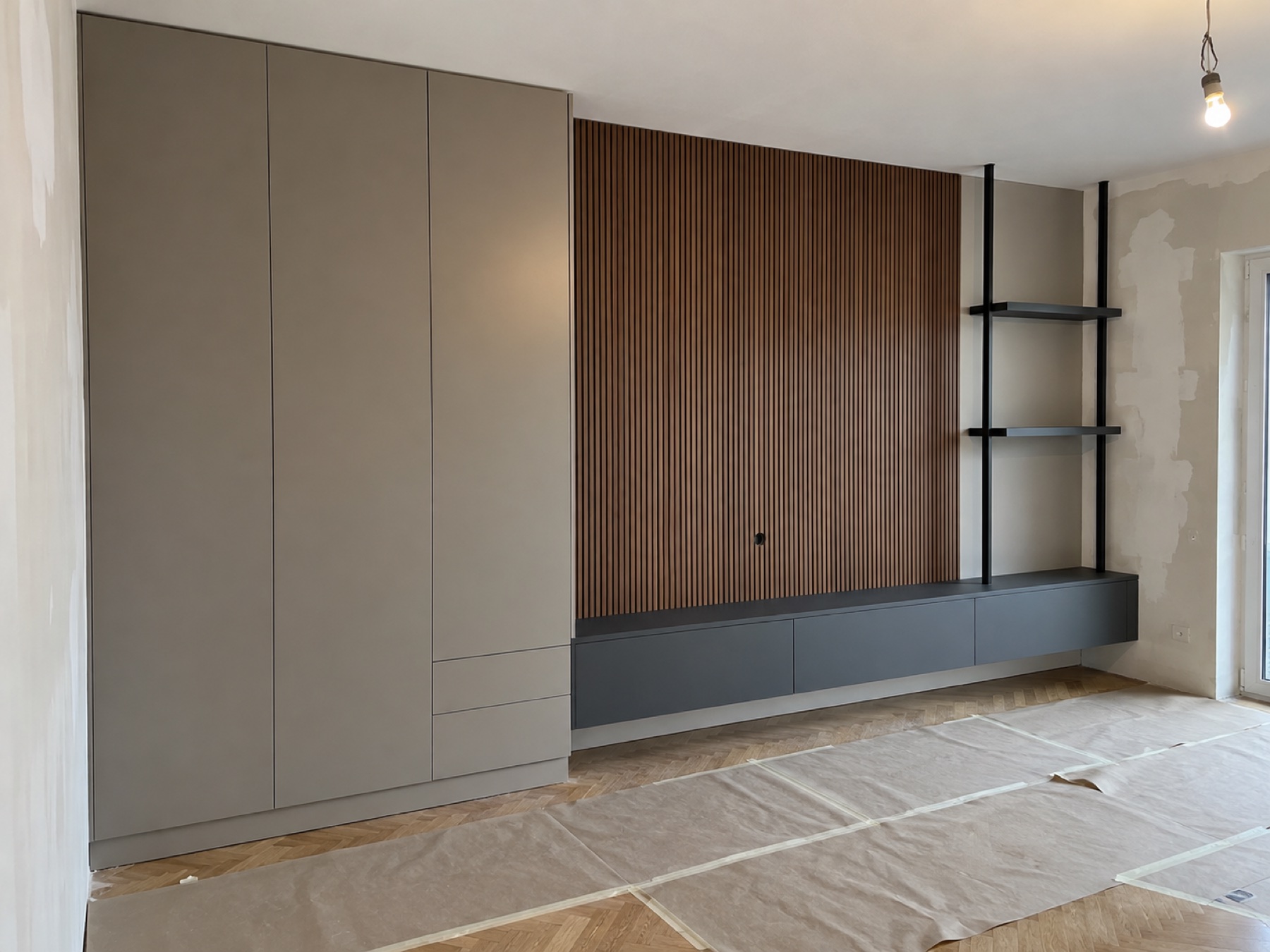
The basics are the carcass, the doors and the hardware. On top of that come rails, shelves, drawers, baskets, pull-down rails, mirrors and LED lighting. Every moving part adds convenience, but also cost.
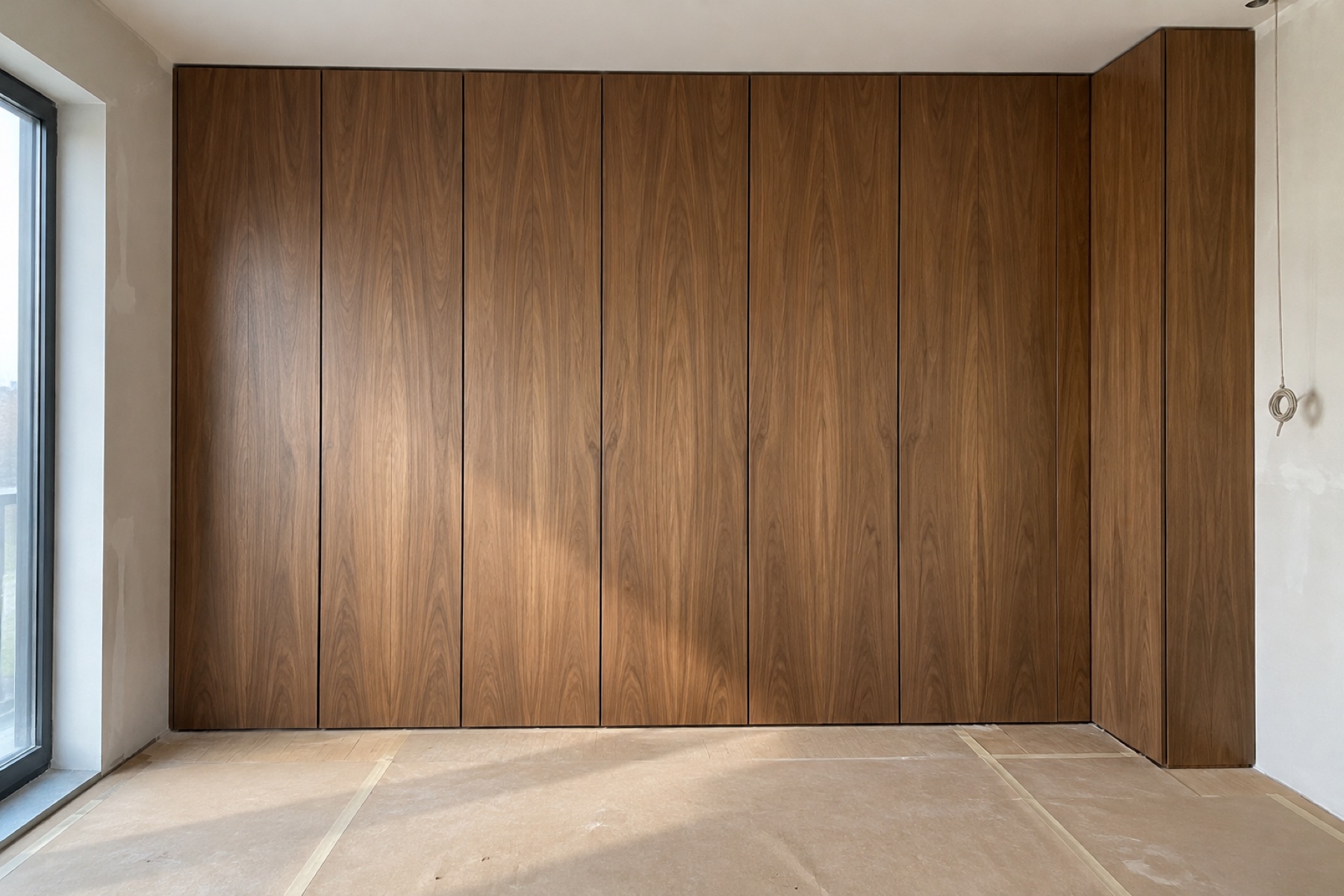
A wardrobe under a slope or from wall to wall needs precise measuring and fitted filler panels. A ready-made module will not use that kind of space nearly as well.
Sliding or hinged doors?
Sliding doors help where there is little space in front of the wardrobe, but they need tracks and overlap, which limits access to part of the interior. Hinged doors let you see everything at once and are usually easier to adjust.
With wide doors, the stiffness of the material and the right number of hinges matter. Base the decision on the layout of the room, not on looks alone.
How to plan the interior without overpaying
Start by counting your things: long clothes, shirts, shoes, suitcases and bedding. Shelves are economical, drawers are convenient, and specialist accessories are worth using where they genuinely solve a problem.
A well-designed interior can be simpler and cheaper than a catalogue full of gadgets. The right heights and easy access matter most.
When is a site survey needed?
Before a binding quote we check plumb lines, angles, skirting boards, sockets and how doors open in the room. For a floor-to-ceiling unit, even a small difference in height matters.
In Silesia we come out to measure in Rybnik, Żory, Jastrzębie-Zdrój, Katowice, Bielsko-Biała and other towns.
Frequently asked questions
Can a wardrobe be built without a back panel?
Yes, in some alcoves that is a sensible solution, but it depends on the condition of the walls and the planned fittings.
Does LED lighting add much to the price?
It is usually not the biggest item in the budget, but the power supply, profiles and switching need to be planned.
Every room has different dimensions and constraints. Describe your project in the form and we will get back to you with the next steps.